
Rice
RICE
Rice (Oryza sativa) is among the world’s most ancient cultivated grains, with archaeological evidence tracing its domestication back over 5,000 years. Today, it remains a dietary cornerstone for more than half of the global population. Asia dominates global production, accounting for approximately 90% of total rice output.
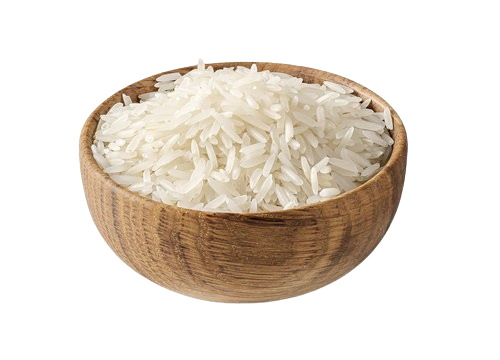
This cereal crop exists in thousands of varieties, but all generally fall into two primary categories based on processing: brown rice, which retains the bran and germ layers, and white rice, which has these outer layers removed for a finer texture and longer shelf life. The grain itself comes in a diverse range of sizes, shapes, and colors—from long-grain basmati to short-grain japonica, and from red and black rice to polished white.
Traditional rice farming involves transplanting young seedlings into flooded paddies—a technique that, while water-intensive, helps suppress weeds, control pests, and reduce rodent damage. This method requires careful irrigation management but remains widely practiced due to its effectiveness. Despite its high water demands and labor-intensive nature, rice can be grown in a wide range of environments, including terraced slopes in mountainous regions where water can be regulated.
Although it is typically cultivated as an annual crop, rice has the potential to behave as a perennial in tropical climates, producing secondary harvests—called ratoon crops—for many years. Its adaptability has enabled rice to spread far beyond its original habitats in Asia and parts of Africa. Through centuries of trade and agricultural innovation, rice has become an integral part of culinary and cultural traditions in nearly every part of the world.